Your Design Might Be Perfect. Your Words Are Losing You Sales.
You can have a beautifully designed website clean layout, strategic white space, a logo that commands trust and still lose customers at the finish line. Why? Because design gets people to stay. Copy is what gets them to act.
Most business owners either write copy that sounds like a brochure (“We provide innovative solutions for all your needs”) or copy so focused on themselves that visitors never see what’s in it for them. Both approaches quietly kill conversions.
Here’s the good news writing website copy that converts isn’t about being a natural-born writer. It’s a repeatable framework and once you know it, you can apply it to every page on your site.
Why Most Website Copy Fails
Before the fix, it helps to know what’s actually going wrong:
- It leads with features, not outcomes. “24/7 support” means nothing until you explain what that means for the customer’s peace of mind.
- It’s vague. Words like “innovative,” “cutting-edge,” and “world-class” are so overused they’ve become invisible and meaningless.
- It talks about “we” instead of “you.” Visitors don’t care about your company history in the first 10 seconds. They care about their own problem.
- There’s no clear next step. Even great copy fails if the reader doesn’t know exactly what to do next.
The Website Copy Framework That Converts
1. Start With the Problem, Not Your Product
Your headline and opening lines should immediately signal: “I understand exactly what you’re struggling with.” This is what earns the next few seconds of attention. Skip the “Welcome to our website” openers entirely they waste your most valuable real estate.
Weak: “We offer professional design services.”
Strong: “Your website has 3 seconds to earn trust. Is it doing its job?”
2. Make It About Them, Not You
Every line of copy should answer the visitor’s unspoken question: “What’s in it for me?” Swap “we” and “our” for “you” and “your” wherever possible. This single shift makes copy feel personal instead of corporate.
3. Sell the Outcome, Not the Feature
Features tell. Outcomes sell. Instead of listing what you do, explain what changes for the customer once they work with you.
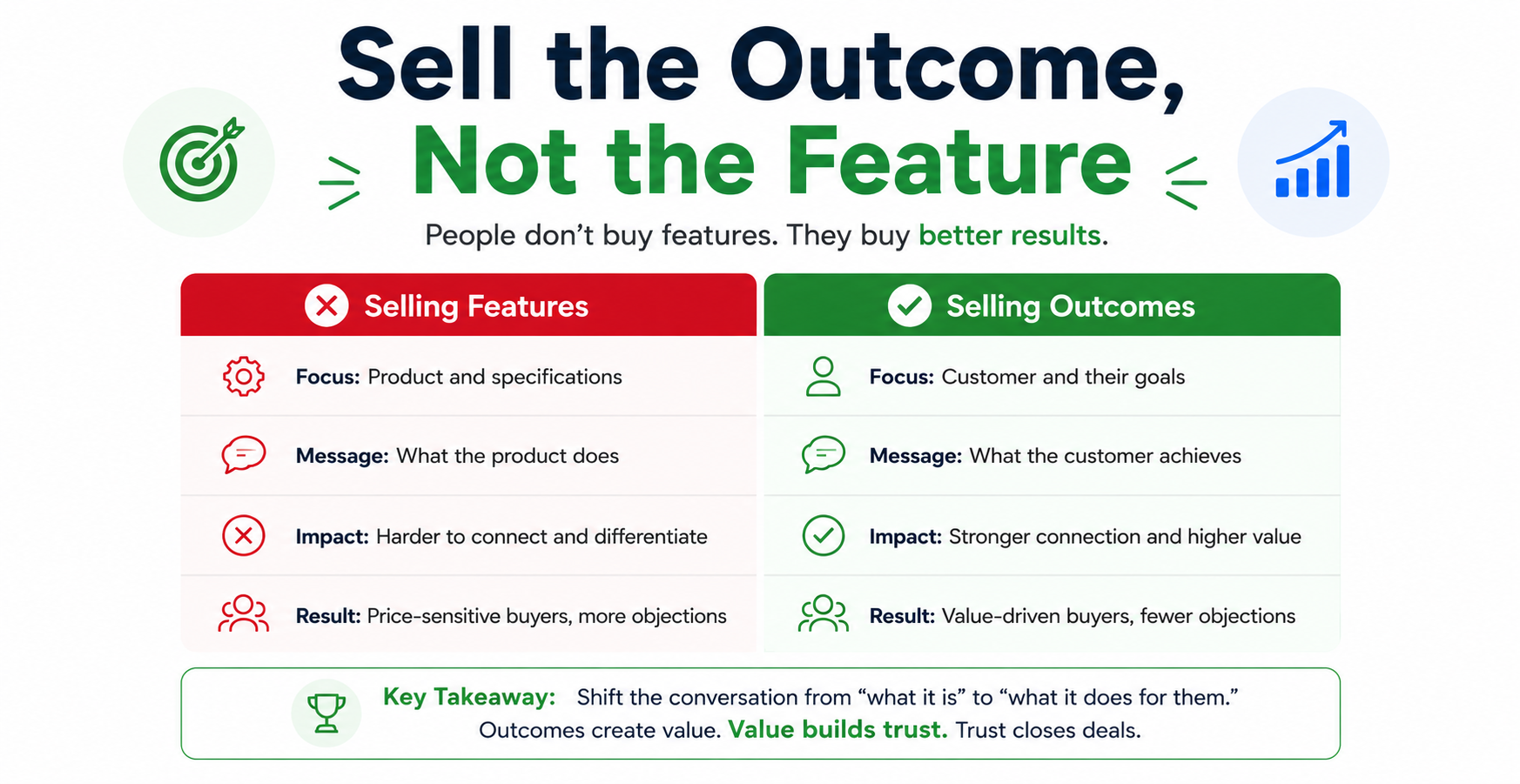
Feature: “Custom logo design”
Outcome: “A logo that makes customers trust you before you say a word”
4. Use Simple, Clear Language
Clarity always outperforms cleverness. If a 12-year-old couldn’t understand your headline, it’s too complicated. Cut jargon, cut buzzwords, and write the way you’d explain it to a friend.
5. Build Trust With Proof
Claims without evidence feel hollow. Testimonials, specific results, case studies, or even simple credibility markers (“Trusted by 100+ businesses”) give visitors a reason to believe you.
6. End With One Clear Call-to-Action
Confused visitors don’t convert they leave. Every page should have one primary action you want the reader to take, stated clearly and without ambiguity: “Get a Free Design Audit,” not “Learn more, explore, or contact us maybe.”
A Simple Before/After Example
Before: “We are a full-service design agency providing logo design, branding, and web development solutions tailored to your business needs.”
After: “Your brand should make customers trust you in seconds not make them question if you’re legit. We design logos, websites, and brand identities that turn first impressions into paying customers.”
Notice the shift: less about the agency, more about the outcome the visitor actually wants.
Where This Copy Framework Matters Most
Homepage Hero Section: This is your highest-traffic, highest-stakes real estate the headline here needs to pass the “3-second test” immediately.
About Page: Even here, keep it outcome-focused. Visitors are really asking, “Can I trust this person/company to solve my problem?”
Service Pages: This is where outcome-driven language matters most visitors here are already close to a buying decision.
This copy framework works even better when paired with strong visual hierarchy something we broke down in why white space in design matters. Clear copy surrounded by cluttered design still underperforms; the two need to work together.
If your copy is strong but conversions are still low, it’s worth checking whether your website’s design itself is driving customers away copy and design failures often show up with the same symptoms.
And if you’re still building your brand voice from scratch, this ties directly into how a stunning brand identity can skyrocket your business your copy tone should match your visual identity.
A Quick Copy Audit Checklist
- Does your headline address a problem, not just describe your service?
- Is “you/your” used more than “we/our” throughout the page?
- Are features translated into outcomes?
- Is there at least one piece of trust-building proof (testimonial, result, credibility marker)?
- Does the page have exactly one clear call-to-action?
- Could someone unfamiliar with your industry understand it in one read?
If you answered “no” to two or more, your copy likely has room to convert better.
Why This Matters for AI Search Too
AI-driven search tools and answer engines increasingly prioritize content that’s clear, well-structured, and directly answers user intent the same qualities that make copy convert for humans. According to Google’s guidance on helpful content, content written primarily to satisfy real audience needs (not just search engines) tends to perform better across both traditional and AI-powered search. Clear, benefit-driven copy naturally aligns with this standard it’s not just good for conversions, it’s good for visibility.
Frequently Asked Questions
Converting copy clearly addresses the visitor’s problem, focuses on outcomes rather than features, builds trust through proof, and ends with one clear call-to-action.
There’s no universal length it depends on the page’s purpose. Homepage hero sections should be short and punchy, while service or sales pages often need more detail to build trust and answer objections.
Should I write website copy myself or hire a professional?
If you understand your audience deeply, you can draft strong copy yourself using a framework like this one. However, a professional copywriter often spots blind spots and structures messaging more strategically, especially for high-stakes pages.
Leading with company information (“About us,” “Our mission”) instead of addressing the visitor’s problem first. Visitors decide whether to keep reading within seconds and they’re looking for relevance, not your company history.
Yes. Clear, well-structured copy that directly answers user intent improves dwell time and reduces bounce rate both signals search engines and AI-driven search tools use to assess content quality.
Ready for Copy That Actually Converts?
Great design gets attention. Great copy gets action. If your website’s words aren’t pulling their weight, a copy audit can show you exactly where visitors are dropping off and how to fix it.
👉 Get a Free Website Copy Audit